When you’re out camping, there’s nothing quite like the sizzling aroma of bacon in the crisp morning air. Cooking bacon while camping can be a delightful and rewarding experience, but it requires some know-how and creativity. In this article, we’ll explore different methods to cook bacon in the great outdoors, ensuring you have a hearty and delicious breakfast to fuel your adventures. Whether you prefer campfire cooking, skillet or griddle methods, Dutch oven delights, or even bacon-wrapped treats, we’ve got you covered. Get ready to elevate your camping breakfast with these mouthwatering bacon cooking techniques!
Before we get into the cooking methods, it’s essential to start with high-quality bacon. When camping, consider bringing pre-packaged bacon that doesn’t require refrigeration until opened. Alternatively, you can freeze bacon before your trip and let it thaw in a cooler while you’re camping.
Opt for thick-cut bacon as it holds up better during cooking and provides a satisfying, meaty texture. Look for bacon with good marbling and minimal additives for the best flavor.
Remember that bacon can be high in fat, so consider your dietary preferences and any health considerations when selecting your bacon for camping. Turkey bacon or other alternatives can be great options if you prefer a leaner choice.
Preparation and Packing
Before you head out on your camping trip, make sure to prepare and pack the bacon properly. Here are some tips to ensure you have everything you need:
Packaging: Keep the bacon in its original packaging or transfer it to a resealable plastic bag to prevent any leakage in your cooler or camping gear.
Cooler Storage: If you’re camping for an extended period or in hot weather, consider freezing the bacon before packing it in your cooler. This will help it stay fresh and avoid any spoilage.
Keep it Chilled: Ensure your cooler is well-insulated and has enough ice or ice packs to keep the bacon chilled throughout your camping trip.
Sealable Container: If you’re concerned about potential spills or leaks, place the bacon inside a sealable container to contain any mess.
Quantity: Bring the right amount of bacon based on your camping group’s preferences. Remember that bacon is rich and flavorful, so you may not need as much as you would in a regular kitchen.
Plan Ahead: Consider the meals you’ll be making with bacon and pack it accordingly. If you’re using it for breakfast and dinner, portion it accordingly to avoid running out.
By following these preparation and packing steps, you can ensure your bacon stays fresh and ready to cook when camping.
Campfire Cooking
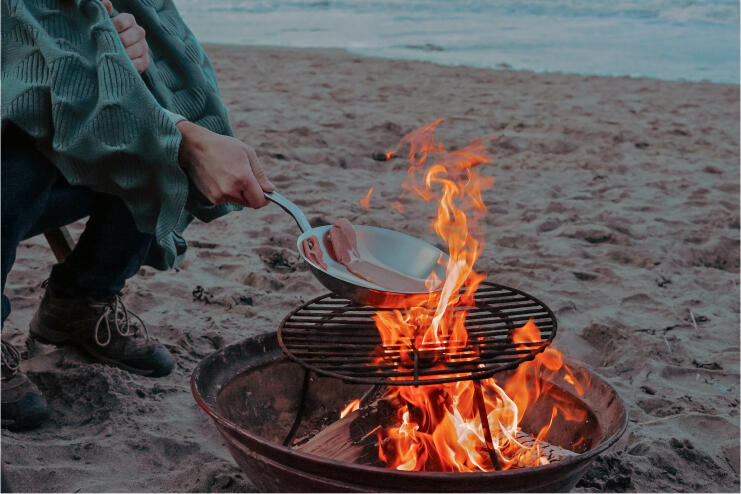
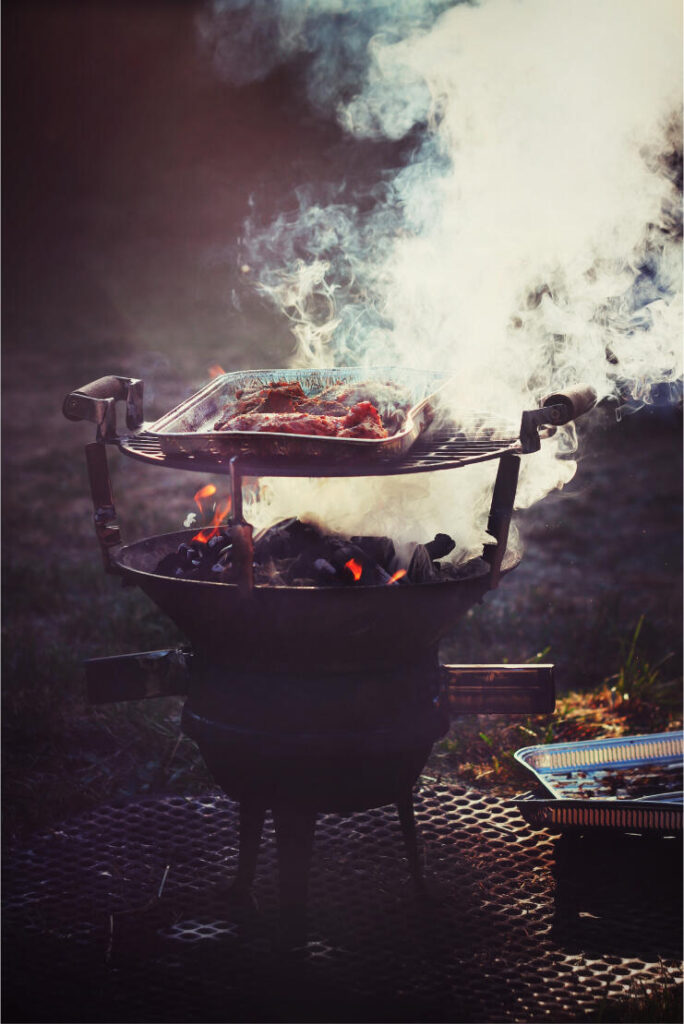
Cooking bacon over a campfire can be a delicious and satisfying experience. Here’s a step-by-step guide to help you cook bacon perfectly while camping:
Build a Campfire: Start by building a campfire and allowing it to burn down to a bed of hot coals. You’ll need a steady and even heat source for cooking bacon.
Use a Campfire Grill or Cooking Rack: Place a campfire grill or cooking rack over the hot coals. This will create a stable surface for cooking the bacon and prevent it from falling into the fire.
Prepare the Bacon: Lay the bacon strips out on a clean surface or a cutting board. You can choose to keep the bacon strips whole or cut them into smaller pieces for easier handling.
Cooking the Bacon: Lay the bacon strips on the campfire grill or cooking rack. Cook the bacon for a few minutes on each side, flipping them occasionally, until they reach your desired level of crispiness. Keep an eye on the bacon to avoid burning.
Drip Tray: Place a heat-resistant drip tray or a sheet of aluminum foil under the bacon to catch any grease drippings. This will help keep your campfire area cleaner and prevent flare-ups.
Remove and Drain: Once the bacon is cooked to your liking, carefully remove it from the campfire grill and place it on a plate lined with paper towels to drain any excess grease.
Enjoy Your Bacon: Serve the delicious campfire-cooked bacon as a standalone snack or use it in various camping meals like breakfast sandwiches, burgers, or salads.
Safety Precautions: When cooking over a campfire, always exercise caution. Use proper campfire safety practices, keep a bucket of water nearby for emergencies, and never leave the fire unattended.
By following these steps, you can savor the mouthwatering taste of freshly cooked bacon while enjoying the great outdoors on your camping trip.
Skillet or Griddle Cooking
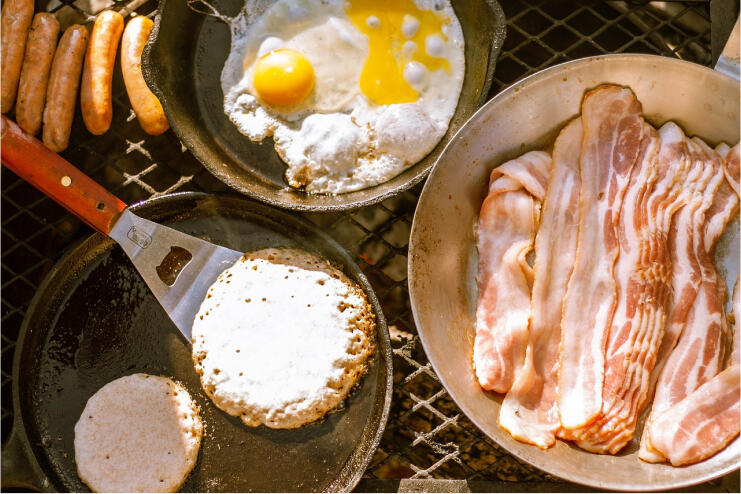
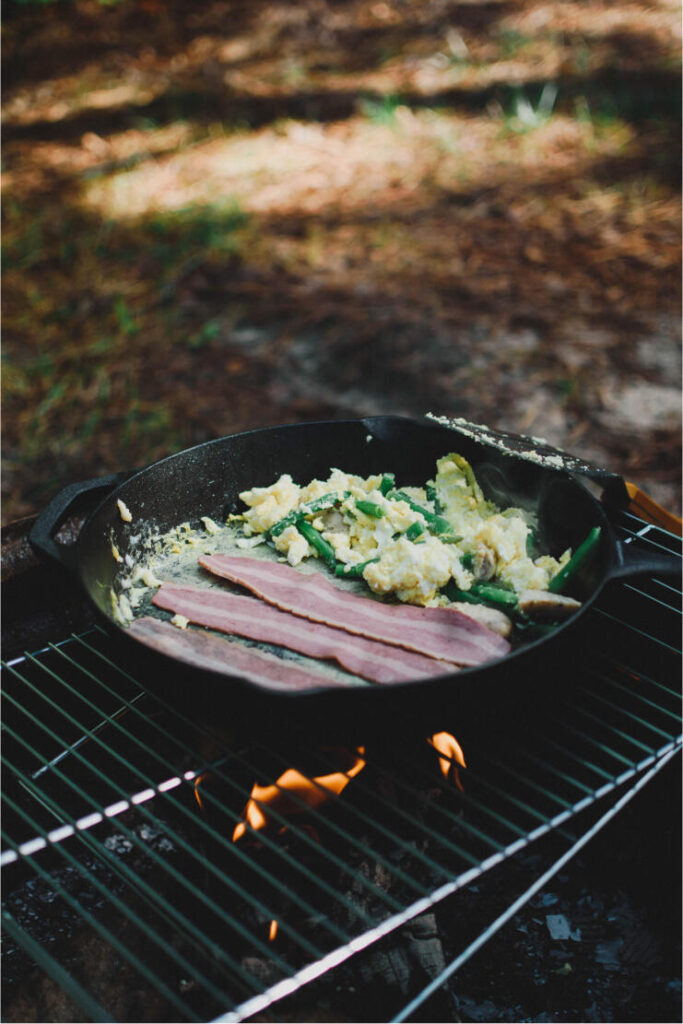
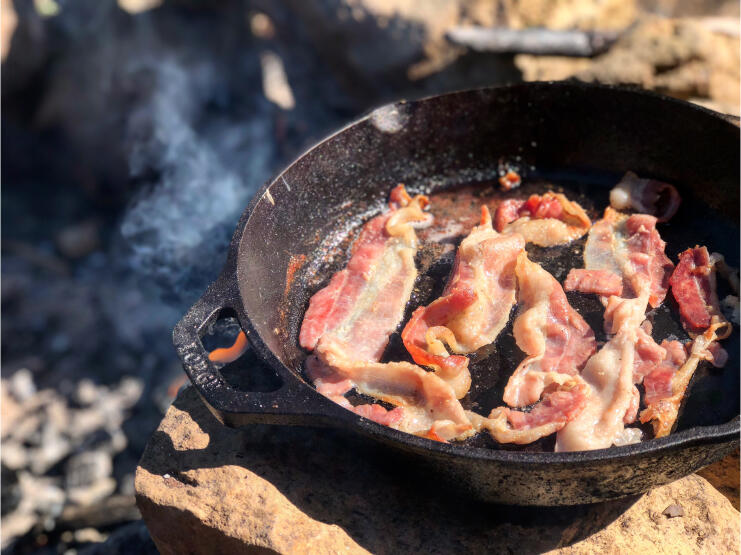
Cooking bacon in a skillet or on a griddle is another excellent method for camping. Here’s how to do it:
Preheat the Skillet or Griddle: Place a cast iron skillet or griddle over your camp stove or portable camping stove. Allow it to preheat for a few minutes until it reaches a medium heat.
Prepare the Bacon: Lay the bacon strips in the skillet or on the griddle. You can cut them into smaller pieces if you prefer.
Cook the Bacon: Cook the bacon on one side for a few minutes until it starts to sizzle and brown. Use tongs to flip the bacon and cook the other side until it reaches your desired level of crispiness.
Drain Excess Grease: As the bacon cooks, it will release grease. Use tongs to transfer the cooked bacon to a plate lined with paper towels to drain any excess grease.
Repeat if Needed: Depending on the amount of bacon you’re cooking and the size of your skillet or griddle, you may need to cook bacon in batches to ensure even cooking.
Enjoy Your Bacon: Once all the bacon is cooked, serve it immediately while it’s hot and crispy. Enjoy it on its own or as part of a hearty camping breakfast.
Clean-Up: Allow the skillet or griddle to cool down before cleaning it. Avoid pouring grease directly into the campsite to prevent attracting wildlife. Instead, let the grease solidify and dispose of it properly in a sealed container.
Skillet or griddle cooking is a convenient way to prepare bacon during camping trips. It allows you to control the cooking process more precisely and is an excellent option when campfires are not allowed or when you want a quicker cooking time.
Dutch Oven Bacon
Cooking bacon in a Dutch oven is a delicious and convenient method for camping. Here’s how to do it:
Prepare the Dutch Oven: Place your Dutch oven on a campfire or portable camping stove. Allow it to preheat for a few minutes over medium heat.
Line the Dutch Oven: To make cleaning easier, you can line the bottom of the Dutch oven with aluminum foil.
Arrange the Bacon: Lay the bacon strips side by side in the Dutch oven. You can cut them into smaller pieces if needed.
Cook the Bacon: Cover the Dutch oven with its lid and let the bacon cook for a few minutes until it starts sizzling and browning. Then, use tongs to flip the bacon to cook the other side.
Check for Crispiness: Keep an eye on the bacon to avoid overcooking. Adjust the heat as needed to achieve your desired level of crispiness.
Remove the Bacon: Once the bacon is cooked to your liking, use tongs to transfer it to a plate lined with paper towels to drain any excess grease.
Serve and Enjoy: Serve the hot and crispy bacon immediately. It can be enjoyed on its own or used as a delicious addition to various camping dishes.
Clean-Up: Allow the Dutch oven to cool down before cleaning it. If you used aluminum foil, remove and discard it, and then clean the Dutch oven with warm water and mild soap. Rinse thoroughly and dry it properly.
Dutch oven bacon offers a unique and flavorful cooking experience while camping. The Dutch oven’s heat retention and even cooking make it an excellent choice for preparing bacon and many other camping recipes.
Cooking Bacon on a Stick
Cooking bacon on a stick is a fun and creative way to enjoy this delicious treat while camping. Here’s how to do it:
Prepare the Bacon: Take slices of bacon and weave them onto a long, sturdy, and clean stick. You can do this by threading the stick through one end of the bacon slice and then gently sliding it along the length of the bacon.
Hold Steady: Hold the stick with the bacon weave steadily over the campfire or portable camping stove. Adjust the height and distance from the flames to control the cooking temperature.
Rotate and Monitor: As the bacon cooks, gently rotate the stick to ensure even cooking on all sides. Keep a close eye on the bacon to prevent it from burning or cooking unevenly.
Cook to Desired Crispiness: Cook the bacon to your preferred level of crispiness. Some campers enjoy it slightly chewy, while others like it fully crispy. Cooking times will vary based on the heat of your campfire and the thickness of the bacon.
Remove and Serve: Once the bacon is cooked to perfection, carefully remove it from the stick using tongs or by sliding it off. Place the bacon on a plate lined with paper towels to absorb any excess grease.
Cool Down and Enjoy: Allow the bacon to cool slightly before enjoying this tasty treat. The smoky flavor from the campfire will add an extra layer of deliciousness.
Cooking bacon on a stick can be a fun activity for kids and adults alike during camping trips. It’s a unique way to cook bacon while embracing the outdoor cooking experience. Just be cautious when handling the stick and ensure it’s sturdy enough to hold the weight of the bacon. Enjoy your campfire-cooked bacon!
Bacon-Wrapped Delights
Bacon-wrapped delights are a mouthwatering addition to any camping meal. Here’s how to cook some popular bacon-wrapped treats:
Bacon-Wrapped Hot Dogs: Wrap slices of bacon around hot dogs and secure them with toothpicks. Cook them over the campfire or on a portable grill until the bacon is crispy and the hot dogs are heated through. Serve them in buns with your favorite toppings.
Bacon-Wrapped Sausages: Similar to hot dogs, you can wrap bacon around sausages, such as bratwurst or chorizo, and cook them over the campfire or grill. The bacon infuses the sausages with a delicious smoky flavor.
Bacon-Wrapped Veggies: Wrap strips of bacon around vegetables like asparagus, mushrooms, or Brussels sprouts. Secure them with toothpicks and grill or cook them in a skillet until the bacon is crispy and the veggies are tender.
Bacon-Wrapped Shrimp: Thread peeled and deveined shrimp onto skewers and wrap bacon around each shrimp. Grill or cook the shrimp until the bacon is crispy and the shrimp are pink and cooked through.
Bacon-Wrapped Potatoes: Cut small potatoes into halves or wedges and wrap bacon around each piece. Secure them with toothpicks and cook them in a skillet or over the campfire until the potatoes are tender and the bacon is crispy.
Bacon-Wrapped Jalapeno Poppers: Cut jalapeno peppers in half and remove the seeds. Fill each half with cream cheese and wrap a slice of bacon around it. Secure with toothpicks and cook on the grill or in a skillet until the bacon is crispy and the peppers are softened.
Remember to monitor the cooking process closely to prevent burning, as bacon can cook quickly over open flames. Enjoy these delectable bacon-wrapped treats as appetizers or main dishes during your camping adventures. The combination of bacon’s smoky flavor with various ingredients will elevate your camping meals to a whole new level of deliciousness.
Safety Tips
Cooking bacon when camping can be enjoyable, but it’s essential to prioritize safety to avoid accidents and ensure a pleasant camping experience. Here are some safety tips to keep in mind:
Fire Safety: When cooking over a campfire, ensure the fire is well-contained and supervised at all times. Keep a bucket of water or sand nearby to extinguish the fire if needed. Never leave the fire unattended, especially when cooking bacon or any other food.
Cooking Area: Choose a safe and level cooking area away from flammable materials like dry grass or leaves. Make sure there are no overhanging branches or nearby structures that could catch fire.
Utensils and Equipment: Use long-handled utensils, tongs, or spatulas to handle the bacon safely and avoid getting too close to the flames. Check that your cooking equipment, such as grills or skillets, are stable and placed on a flat surface.
Hot Bacon Grease: Be cautious with hot bacon grease, as it can cause burns. When cooking bacon in a skillet or on a griddle, use a splatter guard to protect against hot grease splatters.
Extinguishing Grease Fires: If a grease fire occurs, don’t use water to put it out, as it can spread the flames. Instead, use a lid to cover the skillet or smother the flames with baking soda or a fire extinguisher.
Food Handling: Wash your hands before handling food and ensure that the bacon is cooked thoroughly to prevent foodborne illnesses.
Cleanup: Dispose of used bacon grease properly, allowing it to cool and solidify before discarding it in a sealed container. Clean your cooking equipment thoroughly after use to avoid attracting wildlife to your campsite.
Personal Safety: Dress appropriately when cooking, avoiding loose clothing that may come into contact with the fire. Keep a safe distance from the cooking area to prevent accidental burns.
Children and Pets: Supervise children and pets around the cooking area to prevent them from accidentally touching hot surfaces or getting too close to the fire.
By following these safety tips, you can enjoy cooking bacon safely and have a delightful camping experience without any mishaps. Remember that safety is paramount when dealing with open flames and hot cooking surfaces, so always be vigilant and responsible while preparing your camping meals.
Cleaning Up
Cleaning up after cooking bacon is crucial to maintaining a clean and safe camping environment. Here are some steps to effectively clean up after cooking bacon:
Extinguish the Fire: Ensure that the campfire or cooking stove is fully extinguished before you start cleaning. Allow the fire to burn down or use water or sand to put it out completely.
Dispose of Grease Properly: Allow the bacon grease to cool and solidify in the skillet or griddle. Once it has cooled, carefully pour the grease into a sealable container. Never pour grease directly into the campfire, as it can cause flare-ups.
Wipe Down Cooking Surfaces: Use paper towels or biodegradable wipes to wipe down the cooking surfaces, including the griddle, skillet, or grill. Remove any leftover bacon bits or grease residue.
Scrape off Residue: Use a spatula or scraper to remove any stuck-on residue from the cooking equipment. Avoid using soap or detergent if you’re cooking on cast iron, as it can affect the seasoning.
Rinse with Water: If you have access to water, rinse off the cooking equipment to remove any remaining grease or food particles. If possible, do this away from natural water sources to avoid polluting the environment.
Pack Out Waste: Properly dispose of any paper towels, wipes, or food scraps by packing them out with you. Leave no trace by leaving your campsite clean and free of trash.
Wash Utensils and Cookware: If you have access to running water, wash the cooking utensils and cookware with biodegradable soap and warm water. Scrub them thoroughly to remove any grease or residue.
Air Dry: Let the cleaned equipment air dry completely before storing it in your camping gear. Avoid packing wet or damp items, as this can lead to mold and unpleasant odors.
Dispose of Waste Responsibly: Properly dispose of all waste, including grease, food scraps, and trash, in designated trash receptacles or recycling bins. If there are no trash facilities available, pack out everything you brought with you.
Remember that proper cleaning and waste disposal are essential for preserving the beauty of nature and protecting wildlife. Leave your campsite as clean as you found it, and you’ll help ensure that future campers can enjoy the outdoors just as much as you did.
Conclusion
Cooking bacon while camping can be a delicious and enjoyable experience. Whether you prefer the classic campfire cooking method or the convenience of a portable stove or griddle, there are various ways to savor the smoky goodness of bacon in the great outdoors.
When camping, remember to choose the right type of bacon and pack it properly to ensure freshness. Practice safety precautions while cooking over a campfire or stove, and consider using a cast iron skillet or griddle for even heat distribution. Embrace creativity by trying out bacon-wrapped treats and experimenting with different flavors.
After enjoying your bacon-filled meal, take the time to clean up responsibly. Properly dispose of grease and waste to leave no trace of your presence, and respect the natural environment by leaving your campsite pristine.
So, next time you venture into the wilderness, don’t forget to pack your favorite bacon and treat yourself to a memorable camping breakfast that’s sure to energize and delight you for the day’s adventures ahead. Happy camping and bacon cooking!
Winter camping demands a completely different nutritional strategy than summer trips. The cold environment fundamentally changes how your body functions,



 Best Foods to Bring Winter Camping
 Best Hiking Snacks
 How to Cook Over a Campfire